15 May–14 June
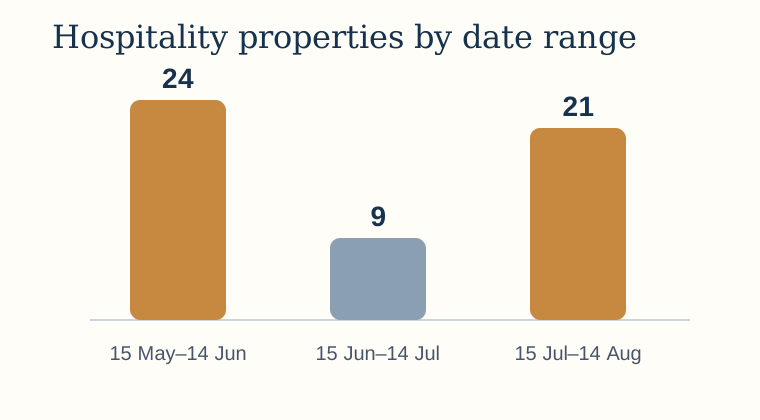
24 properties from 520 Council entries reviewed. This is the broadest period and supplies much of the conversion and accommodation-led picture.
Business activity briefing
Hotels, restaurants, pubs and visitor accommodation across Edinburgh.
A practical review of proposed changes to Edinburgh hotels, restaurants, pubs and visitor accommodation, written for operators, owners, contractors, suppliers and advisers.
Executive summary
We reviewed 1,373 Edinburgh Council planning-list entries and identified 54 hospitality properties with proposed changes. Most involve conversions, refurbishment or specialist work to existing buildings.
What to do next: use this briefing to focus on projects that match your services, working area and preferred project size. This will help you identify the strongest matches and approach them with confidence once their status, timing and supplier arrangements are clear.
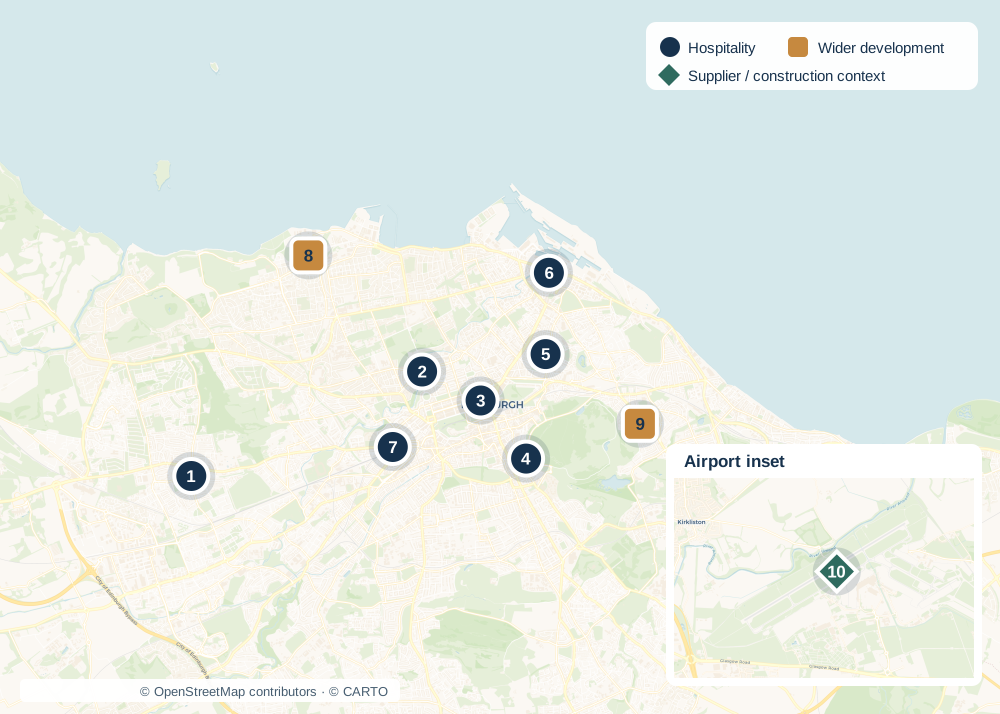
Ten selected examples are shown by approximate area. They illustrate where hospitality projects, wider developments and related supplier work appear. Map data © OpenStreetMap contributors; cartography © CARTO. Explore the interactive map →
At a glance
| What we looked at | What we found | How to use it |
|---|---|---|
| Scale | 54 hospitality properties shortlisted from 1,373 Council entries | A practical starting point drawn from 1,366 different application references across the Council lists. |
| How the count works | 86 mentions in the Council's weekly planning lists represented 85 different references | One appeared twice; three uncertain references were held aside, leaving 82 included. |
| Types of proposed work | 31 accommodation-led; 18 food, drink or pub; 5 shopfront, seating or signage | Different work calls for different suppliers and contractors; tailor the shortlist to your services. |
| Location | City centre, waterfront, inner neighbourhoods and selected outer areas | Focus on the areas where your team works and the types of service you provide. |
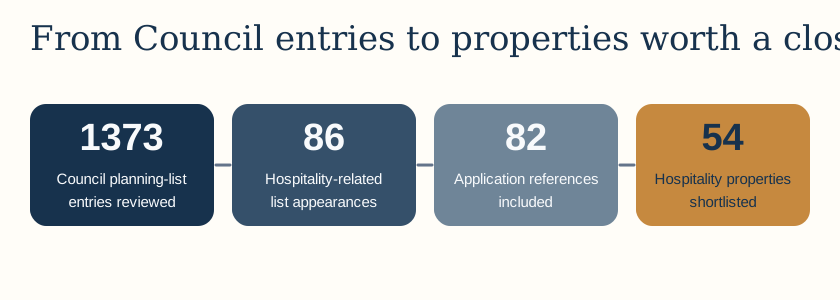
54 main applications + 28 linked applications = 82 included references. The 54 main applications form the public property shortlist; linked applications provide additional evidence without increasing the headline.
Other evidence is kept separate: 13 wider-development records, 9 supplier records and 151 short-term-let and visitor-accommodation records. The Willowbrae crossover remains within the 54-property shortlist.
Dates covered
| Dates covered | Council entries reviewed | Properties |
|---|---|---|
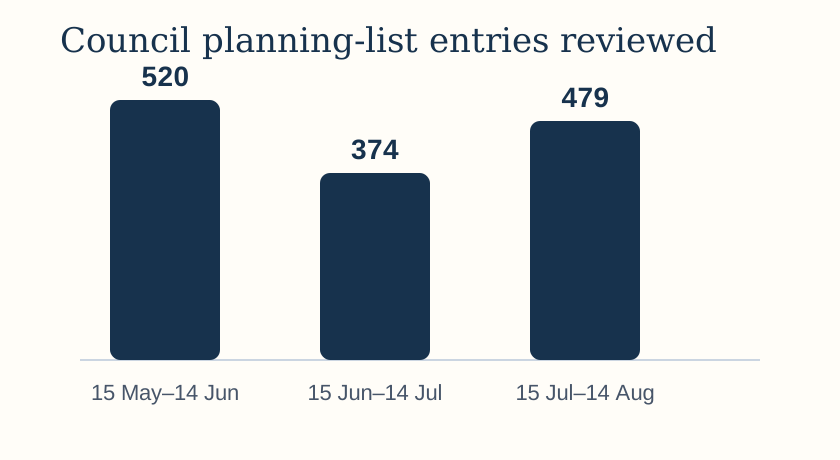
| 15 May–14 June 2026 | 520 | 24 |
| 15 June–14 July 2026 | 374 | 9 |
| 15 July–14 August 2026 | 479 | 21 |
What the figures mean: all three date ranges contain relevant properties, with a lower count in the middle period. Read them as three snapshots rather than a trend or timetable.
24 properties from 520 Council entries reviewed. This is the broadest period and supplies much of the conversion and accommodation-led picture.
Nine properties from 374 Council entries reviewed. Treat the lower count as a period snapshot.
21 properties from 479 Council entries, including refurbishment, conversion and shopfront work.
What to do: review applications regularly and focus on projects whose current status, location and proposed work suit your business. Use each new set of results to refresh your shortlist.
Types of proposed work
Each property is placed in one main category so the table counts it once. The pattern points towards conversions, refurbishment and smaller specialist work, rather than a steady flow of entirely new buildings. “Change of use” means using a property for a different purpose.
| Main type of proposed change | Properties |
|---|---|
| Visitor-accommodation conversion | 13 |
| Visitor-accommodation development | 2 |
| Hotel conversion | 4 |
| Hotel development | 1 |
| Hotel refurbishment | 7 |
| Guest-house and bed-and-breakfast changes | 3 |
| Bar and restaurant conversion | 1 |
| Restaurant works | 4 |
| Food-and-drink use change | 11 |
| Public-house works | 2 |
| Frontage and seating works | 3 |
| Frontage and signage | 2 |
| Hotel infrastructure | 1 |
32 properties mainly involve conversion or a different use. This can create a need for surveys, changes to existing services, access planning, heritage expertise and careful work sequencing.
8 hotels mainly involve refurbishment or building infrastructure. These may suit interiors and heating, cooling, electrical, plumbing and ventilation firms once the likely timetable and the person appointing suppliers are known.
Selected project examples
These examples show the range across the 54 shortlisted properties. Start with those that match your services, then confirm status, timing and the people already involved.
Corstorphine
An office property proposed for hotel use with a supporting restaurant, bar, events space and other facilities.
Potential fit: Interiors, kitchens, bar and event space, access and building systems.
Useful next check: Look for a clearer timetable and confirmation of who will appoint contractors.
Southside / Pleasance
Office accommodation proposed for apartment-hotel use with suites and associated internal changes.
Potential fit: Surveys, adapting existing services and fitting out the rooms.
Useful next check: Confirm the planning position, likely timetable and who will appoint contractors.
Stockbridge
A listed restaurant property proposed for a lower-ground extension and related alterations.
Potential fit: Heritage, structural and extension work for designers and specialist contractors.
Useful next check: Review the listed-building requirements and likely order of work.
Tollcross
An application to use a large house as a guest house, submitted after that use began.
Potential fit: A smaller guest-house project that may suit local interiors and service contractors.
Useful next check: Permission was sought after the use began, so confirm the current planning position first.
Leith / Easter Road
Frontage alterations and a new extract flue proposed at an existing public house.
Potential fit: Ventilation, fabrication and signage specialists.
Useful next check: Confirm the technical detail, timetable and who will appoint suppliers.
Leith waterfront
A barge proposed for bar-and-restaurant use with new decking and quayside seating areas.
Potential fit: Waterside access, outdoor seating and specialist conversion work.
Useful next check: Confirm quay access, permissions and how suppliers will be chosen.
Haymarket
Hotel refurbishment and extension with associated outdoor public-space, landscaping and access work.
Potential fit: Hotel interiors, extension, public-space, landscaping and access work.
Useful next check: Confirm the likely timing and how suppliers and contractors will be chosen.
St Andrew Square
Internal changes proposed to convert storerooms into four additional hotel bedrooms.
Potential fit: Focused interior, electrical, plumbing and ventilation work rather than large-scale main contracting.
Useful next check: Confirm the timetable and who will appoint the specialist firms.
What this means: different projects call for different responses. Review complex conversions early, and match smaller shopfront, ventilation and specialist work to the businesses best suited to deliver it.
Priority locations
Four groups of locations contain different mixes of projects and possible types of work. Start with the areas that best match where your business operates.
Look here first
Hotel, visitor-accommodation, shopfront and restaurant projects create the densest central group.
Why it matters: suited to hotel interiors, professional teams, signage and complex existing-building work; access and heritage issues may shape delivery.
Look here first
Four waterfront projects sit alongside Easter Road and Bath Road activity, with wider change at Western Harbour.
Why it matters: conversion, bar, hotel and pub work creates a varied group requiring different specialist services.
Keep this area in your regular review
Guest-house, apartment-hotel, food-and-drink, shopfront, signage and ventilation themes overlap nearby.
Why it matters: relevant to kitchen, ventilation, interior and small-works teams; tight urban sites and applications made after work began increase the value of a current-status review.
Prioritise projects that match your services
Corstorphine, Haymarket, South Queensferry and Kirkliston are less concentrated but include some larger proposals.
Why it matters: a smaller group can still matter when project scale, location and type of work suit your business.
| Area | Why it may matter | Businesses most likely to care |
|---|---|---|
| Central / New Town | Hotel rooms, conversions, refurbishment, restaurant and frontage activity | Operators, interior contractors, signage, professional and property teams |
| Leith / waterfront | Hospitality conversions, pub works and longer-term waterfront change | Operators, interior teams, heating, cooling, electrical, plumbing and ventilation firms, and property teams |
| Tollcross / Southside | Smaller conversions, food-and-drink and specialist services | Kitchens, ventilation, signage and local contractors |
| West / outliers | Selective larger conversions, refurbishment and infrastructure context | Main contractors, operators and teams with wider service coverage |
What this means: a hotel-interiors team, a local ventilation specialist and a contractor covering several trades each need a different shortlist. Combine location with the proposed work and latest application status.
Nearby development
Residential, education, community, retail and commercial projects can alter the local customer base, access, construction traffic and long-term trading conditions. Use them to understand the wider areas around hospitality properties.
Piersfield
A proposed change from warehouse to retail use in east Edinburgh.
West Pilton
Plans cover improvements to the sports pitch, fencing and lighting.
Merchiston
Plans cover a residential conversion and extension to create eleven flats.
Granton waterfront
A school, nursery and support-base proposal within the wider Granton development framework.
Granton waterfront
A residential proposal of up to 275 homes with open space, drainage, utility and access arrangements, and associated site work.
Fairmilehead
Plans cover a substantial residential redevelopment on previously developed land.
Haymarket
A city-centre record concerning food-retail use.
Western Harbour
Plans cover residential development across several Leith waterfront plots.
Gorgie / Stevenson Road
Plans cover redevelopment of previously developed land for temporary residential accommodation.
Cameron Toll
Plans cover a shopping-centre extension and a new drive-to unit.
Ingliston
Plans alter a mixed-use building and reduce parts of its restaurant space.
Cramond
Plans combine sport, leisure, care, homes and potential food-and-drink uses.
Leith / Tower Street
Plans replace part of an existing hotel car park with eighteen apartments, changing local access and parking.
Willowbrae is discussed here because of its wider significance, but it is counted only among the 54 hospitality properties and is not one of the 13 wider-development records.
Granton and Western Harbour may change population, movement and local services over time. Follow delivery and timing before drawing conclusions for hospitality.
Piersfield, Haymarket and Cameron Toll show local change that may affect nearby trading conditions and contractor activity.
Residential and community schemes can change neighbourhood demand and access. Assess their relevance to each hospitality property separately.
Related supplier work
These nine applications sit outside the 54-property headline and show related specialist work across Edinburgh. The George Street restaurant refurbishment appears in both groups but is counted once.
Tollcross
Kitchen-extraction and external-flue work relevant to heating, cooling, electrical, plumbing and ventilation firms.
Sighthill / Bankhead
Warehouse and office expansion that may interest commercial contractors and suppliers.
Southside / Nicolson Square
Internal changes, shopfront and signage work that may suit a small interior contractor.
Tollcross
Illuminated and digital display work relevant to specialist-signage firms.
Southside / Nicolson Square
Shopfront refurbishment, signage and powered ventilation-extraction work relevant to interior contractors and heating, cooling, electrical, plumbing and ventilation firms.
Abbey Strand / Holyrood
Ticket-office frontage work with replacement windows and retractable awnings.
Newhaven
External finishes and fire-safety barriers inside wall cavities proposed for replacement.
Edinburgh Airport
Plans cover a paved airside compound for airport catering and logistics activity.
George Street
Removal and replacement of restaurant interiors, shopfront redecoration and signage work relevant to hospitality and specialist suppliers.
| Type of business | Work mentioned | Useful next step |
|---|---|---|
| Kitchen and ventilation specialists | Moving extraction equipment, flues and internal services | Review the technical detail, site constraints and who will design and approve the specialist work. |
| Interior and shopfront contractors | Shopfront, internal alteration, awning and window work | Compare the scale, location and heritage requirements with the firm's services. |
| Signage businesses | Illuminated signs, digital displays and frontage work | Confirm the latest planning permission and whether the signs form part of a wider refurbishment. |
| Exterior-building and logistics firms | Facade repair, commercial expansion and catering infrastructure | Use these as examples, then confirm whether a hospitality contract is available. |
How to use these examples: match the work to your services, then confirm whether a buyer, tender or contract exists.
What this means for your business
Start with your services, working area and preferred project size. The same public evidence can then support a different shortlist for each type of business.
Use the map and proposed changes to understand activity around competing, complementary or replacement venues. Confirm the latest status, who will run the venue and possible effects on the local customer base.
Focus on the 32 conversion or use-change applications and 8 hotel upgrade or infrastructure applications. Review surveys, access, work in venues that may remain open, the likely timetable and who will appoint contractors.
Restaurant, bar, pub and hotel activity may create a need for equipment or work in kitchen and service areas. Confirm the equipment, specification and appointment timing for the strongest matches.
Extraction, flues, heating and cooling equipment, hotel infrastructure and conversions deserve specialist review. Confirm who will design and approve the work, existing capacity and planning conditions.
Frontage and signage-led projects plus nearby specialist-signage records create a shorter list. Find out whether signage is standalone, requires separate permission or forms part of a wider interior refurbishment.
Use central, waterfront and neighbourhood groups to compare visible change around properties. Follow wider development for possible effects on the local business picture, footfall and access.
Conversions, listed buildings, mixed-use projects and applications submitted after work or a use began raise planning, design, cost, heritage and compliance questions. Prioritise unresolved problems that fit the team's expertise.
Separate complex projects from small specialist works. Where you operate, preferred project size, likely timing and the people already involved should determine which applications deserve a closer look.
Shared next question: what new information would make this application worth acting on? Look for a decision, technical detail, who will run the venue, a timetable, a named buyer or another public record.
How to use this report
This carefully checked shortlist saves time by narrowing a large Council record set. Use it to focus attention, then confirm the details that determine whether a project fits your business.
Use the 24 / 9 / 21 pattern to compare the three date ranges, rather than as a growth forecast.
Central and waterfront areas matter, while projects elsewhere may be a stronger match for particular services.
Conversion, change of use, refurbishment, shopfront work and infrastructure changes dominate the picture.
Look for a buyer, tender, contractor appointment or another clear route to supplying the work.
Give priority to active proposals with clearer timing, technical detail and decision-makers.
Assess the 13 development records for possible effects on access, nearby activity and the local customer base.
| Starting point | Recommended next step |
|---|---|
| The 54-property shortlist | Rank projects by fit with your services, location, current status and preferred project size. |
| A promising application | Confirm timing, buyers and how contractors or suppliers will be chosen. |
| Linked applications | Follow the application history around the same project before deciding what it means. |
| Wider development nearby | Assess possible local effects, then look for direct evidence before acting. |
Best use: combine this briefing with direct Council status checks, commercial judgement and professional advice.
30 / 60 / 90-day action plan
Useful signs include an application status change, supporting technical detail, clearer plans for who will run the venue or a credible timetable.
| Reader | Sign worth watching | Question to answer |
|---|---|---|
| Operator / owner | Who will run the venue, permission status change, licensing or trading evidence | Does this change the competitive or property-management view? |
| Interior / main contractor | Technical detail, conditions, likely timetable or information about the people already involved | Is there a defined piece of work and credible evidence that it will proceed? |
| Heating, cooling, electrical, plumbing and ventilation firms | Heating, cooling, extraction, capacity or kitchen service-area detail | Is a specific piece of specialist work becoming clear? |
| Signage / frontage | Signage permission, drawings of building frontages or linked refurbishment activity | Is the work standalone or part of a wider project? |
| Professional team | Heritage, change-of-use, compliance or cost complexity | Is there an unresolved problem that fits our expertise? |
Appendix A · Evidence confidence
The Council coverage and headline counts are strongly supported. Project timing, supplier selection and future demand still require direct confirmation.
We reviewed all 28 Council Part A bulletins covering 14 weekly periods. Together they contained 1,373 entries and 1,366 different application references. The public shortlist contains 54 hospitality properties.
Each shortlisted property is placed in one main category so the activity table counts it once. Real projects may contain other types of work.
Area patterns help readers decide where to look. The public map uses approximate locations and shows ten examples rather than every property.
Conversion, refurbishment, ventilation, equipment, shopfront and signage themes point to possible types of work. Their relevance depends on the reader.
Confirm start dates, tenders, awards, budgets, buyers and whether work is currently available.
Assess supplier demand, trading outcomes and market growth using later evidence beyond the planning records.
The status notes reflect the reporting period unless a later check date is shown. We did not recheck all 106 references on 25 August 2026, so confirm the latest position with the Council before acting.
A planning application is an early public indication. It is not proof that work will start, a project is commercially viable, a tender exists, a contract has been awarded or an investment will perform.
Appendix B · Counting method
All 28 Council Part A bulletins across 14 weeks were reviewed: 1,373 entries covering 1,366 different application references.
The Council's weekly planning lists contained 86 hospitality-related mentions. One application appeared in two different weeks, leaving 85 unique references.
Of the 85 unique hospitality references, 82 were included and three were held aside because their relevance was uncertain.
The evidence register contains 54 main applications and 28 linked applications. One main application was selected for each of the 54 properties. The public headline uses those main applications as its property shortlist.
151 short-term-let records, 13 wider developments and nine supplier records are reported as separate groups.
The public report uses totals, broad areas and examples. The paid pack contains named properties, source links and recorded period status notes.
86 mentions − one repeat − three held = 82 included references.
Those 82 comprise 54 main applications and 28 linked applications.
82 included + three held + 13 wider + nine supplier − one shared = 106 unique references.
Overlaps are counted once.
Why the 54 figure is used: it is the public shortlist of 54 main hospitality applications. Linked applications support the evidence register but do not increase the headline.
Commercial conclusion
The £195 Edinburgh Hospitality Evidence Pack includes all 54 named properties, exact locations, a detailed map, planning references, source links and the planning position recorded during this review.
Use it to find the projects that best match your services, working area and preferred project size.
Tell James what your business does and where you work. He will answer any questions about the Evidence Pack and explain the next step.
Request the Edinburgh Evidence Pack — £195Prefer a tailored shortlist?
Enquire about a Focused Opportunity Review →Want regular coverage across hospitality, commercial property and development?
Explore the Edinburgh Market Activity & Opportunity Monitor →This publication provides evidence-led commercial context only. It is not planning, legal, financial, investment or procurement advice and does not guarantee future work.